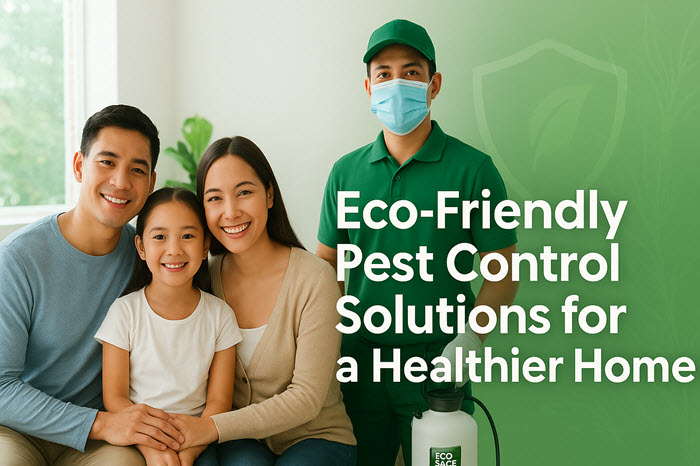
Eco-Friendly Pest Control Solutions for a Healthier Home
Eco-Friendly Pest Control Solutions for a Healthier Home
Implementing eco-friendly pest control gives homeowners a practical way to eliminate common pests while taking a responsible approach to family, pets, and the surrounding environment. Instead of depending solely on harsh chemical applications, modern pest management combines prevention, detailed inspection, targeted treatments, proper sanitation, and routine monitoring. By taking a more balanced approach, you can maintain a clean, pest-free living environment without compromising safety.
Furthermore, a healthier home always starts with preventing pest problems before they escalate. Consequently, homeowners should identify the underlying conditions that attract pests and address those factors early on.
What Is Eco-Friendly Pest Control?
In simple terms, eco-friendly pest control is an environmentally responsible approach to managing pests while reducing unnecessary chemical exposure. The main goal is not just to eliminate visible insects or rodents temporarily. Instead, this strategy addresses why pests are present in the first place and establishes long-term prevention methods.
Depending on your specific situation, a sustainable pest management program may include:
- Thorough indoor and outdoor property inspections
- Accurate pest species identification
- Physical prevention and structural exclusion
- Targeted sanitation and clutter management
- Comprehensive moisture control strategies
- Continuous pest monitoring and follow-up inspections
As a direct result, homeowners can resolve persistent pest problems effectively while keeping chemical applications to an absolute minimum.
Why Responsible Pest Control Matters
Pesticides can certainly be useful when properly selected and applied by professionals. However, improper DIY usage can create unnecessary health risks and often fails to resolve the root problem. For instance, applying excessive amounts of a product does not yield better results. Likewise, spraying chemicals in areas that do not require treatment increases exposure without solving the infestation.
Therefore, homeowners should always follow official guidelines and product safety instructions. In the Philippines, the Fertilizer and Pesticide Authority (FPA) regulates pesticide products and provides public safety resources. Homeowners can consult the FPA’s directory of registered pesticide products as well as their database of licensed pesticide handlers to ensure they are working with certified, safe standards.
How Eco-Friendly Pest Control Works in Practice
Effective pest management relies on understanding pest behavior. When a technician conducts an inspection, they focus on finding key survival factors such as:
- Uncovered food and water sources
- Hidden moisture leaks behind walls or sinks
- Unsealed structural cracks, gaps, and entry points
- Nesting locations and dark hiding areas
Once these underlying conditions are corrected, treatments become significantly more effective. Consequently, you avoid the endless cycle of repeated chemical sprays.
Key Steps to Implement Sustainable Pest Control
1. Start With a Professional Pest Inspection
First, a professional inspection establishes a baseline. A trained technician identifies the exact pest species and pinpoints active harborage locations. For example, seeing cockroaches in the kitchen doesn’t mean it’s the only affected area—they often hide behind heavy appliances, inside hollow cabinets, or near plumbing connections.
2. Identify the Pest Species Correctly
Because different pests require completely different management strategies, proper identification is crucial. Ants, cockroaches, termites, rodents, and mosquitoes have unique habits and diets. Using the wrong treatment usually yields zero results. If you have already tried multiple off-the-shelf products without success, read The Hidden Dangers of DIY Pest Control to understand why recurring infestations need professional expertise.
3. Focus Heavy on Prevention and Exclusion
One of the greatest benefits of eco-friendly pest control is its heavy emphasis on physical prevention. You can dramatically reduce pest activity by making your property less inviting to pests. Essential steps include sealing gaps around door frames, repairing leaky faucets, storing dry food in airtight glass or plastic containers, and eliminating outdoor clutter.
4. Adopt Integrated Pest Management (IPM)
Finally, adopting Integrated Pest Management (IPM) offers a comprehensive framework. IPM brings together monitoring, sanitation, structural repair, and targeted eco-friendly treatments. For long-term protection, partnering with professionals like Dash5 Pest Control ensures your home stays protected using safe, environmentally conscious methods.
Frequently Asked Questions (FAQs)
1. Is eco-friendly pest control as effective as traditional chemical spraying?
Yes, eco-friendly methods are highly effective because they target the root causes—such as entry points, food sources, and nesting areas—rather than just killing visible pests temporarily.
2. Are eco-friendly pest solutions safe for pets and children?
When applied by licensed professionals using IPM strategies, eco-friendly methods prioritize non-toxic barriers, targeted baits, and minimal chemical risk, making them much safer for households with pets and kids.
3. How often should an eco-friendly pest inspection be conducted?
It is recommended to have a professional pest inspection conducted at least once or twice a year to spot potential vulnerabilities before an infestation occurs.