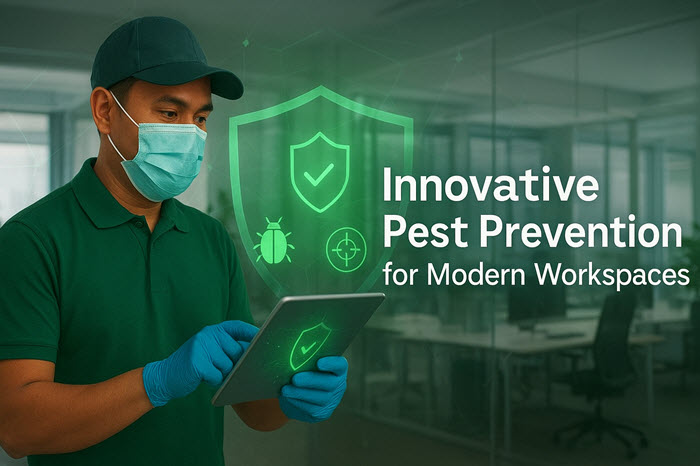
Innovative Pest Prevention for Modern Workspaces
Workplace Pest Prevention: Smart Strategies for Modern Offices
Modern businesses need more than a clean-looking office. They need a healthy, comfortable, and well-maintained workplace. Effective workplace pest prevention helps businesses reduce pest risks before they become costly problems. It also supports employee comfort, protects property, and helps maintain a professional image.
Pests can enter offices, retail stores, warehouses, restaurants, and other commercial facilities through small openings. They can also arrive through deliveries, food, packaging, waste areas, and neighboring properties. Therefore, businesses should not wait until an infestation becomes obvious before taking action.
Instead, modern workplace pest prevention focuses on early detection, routine inspections, sanitation, exclusion, monitoring, and targeted treatment. This proactive approach can help businesses manage pest risks while minimizing disruption to daily operations.
Why Workplace Pest Prevention Matters
Pest problems can affect more than the appearance of a workplace.
Cockroaches, ants, rodents, flies, termites, and other pests can create sanitation concerns. They may also damage property, contaminate areas, disrupt operations, or negatively affect customer confidence.
For businesses that serve food or handle products, the consequences can be even more serious. A visible pest problem may quickly become a reputation issue.
Furthermore, employees expect their workplace to be clean and comfortable. A recurring pest problem can affect morale and create unnecessary distractions.
That is why prevention is often more practical than waiting for a major infestation.
What Is Modern Workplace Pest Prevention?
Traditional pest control often focuses on treating pests after they appear. Modern pest management takes a broader approach.
Workplace pest prevention combines several strategies to reduce pest activity before it becomes a major problem.
These strategies may include:
- Routine property inspections
- Pest identification
- Monitoring and early detection
- Sanitation improvements
- Waste management
- Sealing cracks and openings
- Moisture control
- Targeted pest treatments
- Employee awareness
- Follow-up inspections
Rather than relying on one treatment method, businesses can use several preventive measures together.
1. Start With Regular Pest Inspections
Regular inspections are one of the most important parts of workplace pest prevention.
A professional inspection can identify signs of pest activity before an infestation becomes widespread. Technicians may inspect kitchens, storage rooms, loading areas, utility spaces, waste areas, restrooms, ceilings, and other potential pest harborage locations.
During an inspection, look for:
- Droppings
- Gnaw marks
- Pest carcasses
- Nesting materials
- Insect activity
- Damaged packaging
- Grease or food buildup
- Moisture
- Cracks and gaps
- Signs of termite activity
Early detection gives businesses more time to respond.
Consequently, routine inspections can reduce the likelihood of a small pest issue becoming a larger operational problem.
2. Use Integrated Pest Management
Integrated Pest Management, or IPM, is an important concept in modern pest management.
The approach combines monitoring, prevention, environmental management, and appropriate pest control methods. The goal is not simply to eliminate pests after they appear. Instead, IPM focuses on understanding why pests are present and reducing the conditions that support them.
The Philippine Fertilizer and Pesticide Authority discusses Integrated Pest Management as part of its pesticide-related training and regulatory work.
Businesses can learn more about the FPA’s available pesticide guidelines and manuals when researching responsible pest management practices.
For a modern office, IPM may include inspection, sanitation, exclusion, monitoring, and targeted treatment.
3. Improve Workplace Sanitation
Cleanliness is a major part of workplace pest prevention.
Food crumbs, spills, overflowing trash, and improperly stored food can attract insects and rodents. Therefore, businesses should establish consistent cleaning procedures.
Employees can help by:
- Cleaning food preparation areas promptly
- Storing food in sealed containers
- Removing garbage regularly
- Cleaning spills immediately
- Keeping desks and storage areas organized
- Avoiding food accumulation in workstations
- Reporting pest sightings quickly
However, sanitation alone may not eliminate every pest problem.
If pests have already established nests or access points, professional inspection and treatment may still be necessary.
4. Control Moisture and Standing Water
Many pests are attracted to moisture.
Leaking pipes, clogged drains, condensation, roof leaks, and standing water can create favorable conditions for pest activity.
For that reason, workplace maintenance teams should inspect areas where moisture may accumulate.
Pay particular attention to:
- Restrooms
- Kitchens
- Utility rooms
- Air-conditioning areas
- Roof spaces
- Drainage points
- Storage areas
- Outdoor waste zones
Fixing leaks quickly can reduce potential pest attractants.
In addition, keeping drainage systems clean can help reduce conditions that support insects.
5. Seal Entry Points
A pest cannot establish itself easily if it cannot enter the building.
Small gaps around doors, windows, pipes, vents, utility lines, and walls can provide access. Rodents can squeeze through surprisingly small openings. Insects can also use cracks and gaps to enter.
Therefore, workplace pest prevention should include regular exclusion checks.
Businesses should inspect:
- Door gaps
- Window frames
- Wall cracks
- Pipe openings
- Electrical penetrations
- Roof access points
- Ventilation openings
- Loading dock areas
Sealing these openings can complement professional pest management and reduce future entry.
6. Manage Waste Properly
Waste areas can become major pest attractants.
Food waste, cardboard, packaging, and organic materials can provide food and shelter for insects and rodents.
Consequently, businesses should keep waste containers closed and remove waste according to a consistent schedule.
Outdoor waste areas should also be inspected regularly.
Where possible, keep garbage containers away from building entrances and maintain clean surfaces around waste storage areas.
7. Consider Digital Pest Monitoring
Technology is changing workplace pest prevention.
Modern monitoring systems can help businesses detect pest activity earlier. Depending on the property and pest involved, smart monitoring devices may provide useful information about activity patterns.
For example, monitored traps and sensors can help identify activity in areas that are not regularly occupied.
However, technology should support professional pest management rather than replace proper inspection.
Data is useful when it leads to appropriate action.
8. Train Employees to Recognize Pest Risks
Employees can become an important part of a workplace pest prevention program.
Staff members spend significant time inside the property. As a result, they may notice unusual pest activity before a scheduled inspection.
Businesses can teach employees to report:
- Live or dead pests
- Droppings
- Unusual odors
- Damaged packaging
- Gnaw marks
- Nesting materials
- Repeated insect activity
Employees should also understand basic prevention habits.
For example, food should be stored properly, spills should be cleaned quickly, and pest sightings should be reported rather than ignored.
9. Protect High-Risk Areas
Not every part of a workplace has the same level of pest risk.
Kitchens, cafeterias, storage rooms, loading docks, waste areas, and warehouses may require additional attention.
Restaurants, in particular, need strong pest prevention because food, moisture, deliveries, and waste can create multiple attractants.
Warehouses may face different risks because of packaging, pallets, storage conditions, and incoming shipments.
Therefore, a workplace pest prevention plan should be customized to the property’s activities.
10. Use Targeted Pest Treatments
Prevention should always be the first line of defense. However, treatment may be necessary when pest activity is detected.
Targeted treatments can focus on areas where pests are active or where conditions support infestation.
This approach can be more practical than applying unnecessary treatment throughout an entire property.
Furthermore, businesses should ensure that pest control products are handled and applied responsibly.
The FPA maintains a current Licensed Handlers database, which includes information on registered pesticide handlers.
The FPA also publishes resources addressing pesticide handling and responsible use.
For commercial properties, businesses should discuss treatment procedures, preparation requirements, safety precautions, and follow-up recommendations with their pest management provider.
11. Create a Preventive Maintenance Schedule
Workplace pest prevention works best when it becomes part of routine property maintenance.
Instead of waiting for complaints, businesses can schedule regular inspections and preventive activities.
A maintenance schedule might include:
- Monthly pest inspections
- Regular sanitation checks
- Waste-area inspections
- Drain and moisture checks
- Building-exclusion inspections
- Pest monitoring
- Employee reporting
- Follow-up treatment when required
The exact frequency should depend on the property, pest risks, industry, and infestation history.
12. Protect Your Business Reputation
Customers notice cleanliness.
A single visible cockroach in a restaurant, retail store, hotel, or office can create a negative impression. In today’s digital environment, customers can also share their experiences quickly through reviews and social media.
Therefore, workplace pest prevention is not only a maintenance issue. It can also support brand reputation.
A clean and well-maintained workplace demonstrates that a business takes its employees, customers, and facilities seriously.
Workplace Pest Prevention for Different Businesses
Different workplaces require different strategies.
Offices
Offices should focus on food storage, employee break rooms, waste management, drainage, and building entry points.
Regular inspections can help identify hidden activity before it spreads.
Restaurants
Restaurants require strict attention to sanitation, food storage, waste management, drains, delivery areas, and kitchen equipment.
Because food is constantly present, restaurants can benefit from structured pest monitoring and preventive service.
Warehouses
Warehouses should focus on incoming shipments, storage practices, packaging, loading docks, waste areas, and structural gaps.
Organized storage can also make inspections easier.
Retail Stores
Retail businesses should monitor storage rooms, receiving areas, shelves, food sections, waste areas, and customer-facing spaces.
Early detection can help prevent pests from becoming visible to customers.
Industrial Facilities
Industrial properties may have large storage areas, machinery, utility rooms, drainage systems, and multiple entry points.
Consequently, pest prevention programs should be customized to the facility’s layout and operational risks.
Why Professional Pest Management Can Help
A professional pest management provider can bring experience, inspection skills, monitoring strategies, and treatment knowledge to a workplace pest prevention program.
Instead of reacting only when employees report pests, businesses can establish a proactive system.
Dash5 Pest Control provides pest management services for commercial environments. Its commercial service offering is designed for businesses such as offices, warehouses, restaurants, retail stores, and industrial facilities.
You can learn more about Dash5 commercial pest control and how a customized service can support different business environments.
For general information about Dash5 services, visit the Dash5 Pest Control homepage.
Workplace Pest Prevention Checklist
Businesses can use this simple checklist as part of their ongoing prevention program:
- Inspect the property regularly.
- Seal cracks and potential entry points.
- Keep food in sealed containers.
- Remove waste on schedule.
- Clean spills immediately.
- Repair leaks and moisture problems.
- Keep storage areas organized.
- Monitor high-risk areas.
- Train employees to report pest activity.
- Schedule professional inspections.
- Keep records of pest sightings and treatments.
- Review the prevention program regularly.
A consistent approach makes pest prevention easier to manage.
Frequently Asked Questions
What is workplace pest prevention?
Workplace pest prevention is a proactive approach to reducing pest activity in offices and commercial facilities. It combines inspection, sanitation, exclusion, monitoring, employee awareness, and targeted treatment.
Why is pest prevention important for businesses?
Pests can affect sanitation, employee comfort, property, operations, and customer perception. Preventive measures help businesses identify and address risks before they become major infestations.
How often should a workplace be inspected for pests?
The ideal frequency depends on the type of business, property conditions, pest history, and risk level. High-risk facilities may need more frequent inspections and monitoring.
Can employees help prevent workplace pests?
Yes. Employees can help by storing food properly, cleaning spills, keeping work areas organized, and reporting pest sightings promptly.
Is Integrated Pest Management useful for offices?
Yes. IPM provides a structured approach that combines monitoring, prevention, environmental controls, and appropriate treatment methods.
When should a business hire a professional pest control company?
A business should consider professional help when pests are recurring, widespread, difficult to identify, or affecting employees, customers, products, or operations.
Final Thoughts
Effective workplace pest prevention is about more than eliminating pests after they appear. It is about creating systems that reduce the conditions that allow pests to enter, feed, hide, and reproduce.
Regular inspections, good sanitation, moisture control, exclusion, employee awareness, monitoring, and targeted treatment can work together to protect modern workplaces.
Furthermore, professional pest management can help businesses identify risks that may otherwise go unnoticed.
For businesses that want a cleaner, healthier, and more reliable workplace, proactive pest prevention is a smart investment. By addressing pest risks early, companies can protect their people, property, operations, and reputation.